Chester County’s 2026 capital budget, printed page 339, includes $220,733 for data center firewalls as part of a move toward zero trust security.
This guide compares that existing plan with federal guidance on access controls. The budget does not confirm completed installation or testing.
Three separate technology investments
The capital project descriptions on printed pages 338 and 339 identify different equipment needs:
| Project | Amount listed for 2026 | Purpose in the budget |
|---|---|---|
| Network firewalls | $220,733 | Install equipment supporting the move toward zero trust |
| Network switch replacement | $33,370 | Replace equipment reaching the end of its service or support life |
| File and backup storage | $444,998 | Replace aging equipment and increase storage capacity |
These are annual amounts. The switch and storage schedules continue through 2028; the firewall entry lists 2026 as its estimated completion year. The firewall description does not identify a vendor, product model, subscription term or acceptance test.
What zero trust means for access
The National Institute of Standards and Technology’s zero trust publication describes an approach that evaluates users, devices and the resources they want to reach. Being inside an organization’s network, or using equipment it owns, does not automatically establish permission.
Its core principles, printed pages 6 and 7, call for access decisions tied to a particular session and limited to the permissions needed for the task. Permission to use one resource does not automatically open another.
For example, access to a work application would not, by itself, authorize access to every other database on the network. That illustrates the principle; it is not a description of how Chester County has configured a particular application.
NIST also describes access policies that consider the requesting device’s condition, including software versions, alongside identity and other information. The practical work therefore includes keeping track of equipment and permissions as well as installing network hardware.
What an implementation record would show
NIST’s migration guidance, printed page 36, describes a gradual process. Organizations first need an inventory of users, devices, business processes, data flows and dependencies. Existing systems may continue operating alongside newer access controls during that transition.
For residents following the county expenditure, useful public questions include which services the project covers, how ongoing support and subscription costs are funded, and what milestones demonstrate that the work was accepted. A procurement award, completion report or published project update would answer different questions from the original budget allocation.
Those records could document delivery and oversight without exposing sensitive network settings. This review does not establish the county’s current security maturity, test results or protection against a particular attack.
The county’s separate cybersecurity assessment grant application concerns a review of security needs. Readers can follow that funding decision and other local technology reporting in the Chester County coverage hub.
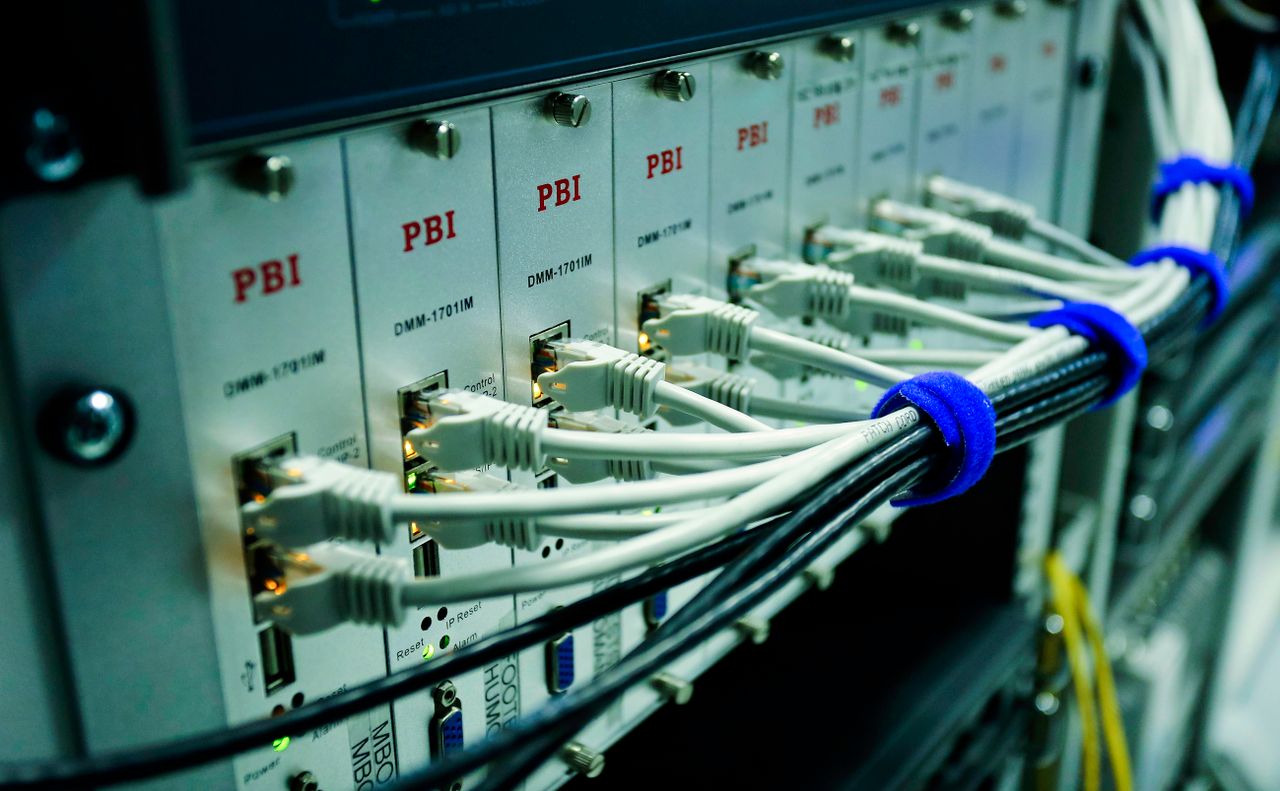
Photo: Sergei Starostin on Pexels, used under the Pexels License. Illustrative stock photograph of network cabling and equipment. It does not show Chester County’s systems or the budgeted firewalls.
Related articles

Chester County
Tredyffrin’s .gov transition: Website and email checks
Tredyffrin aims to finish its .gov transition by the start of 2027. Compare current township contacts with federal guidance on domains and email checks.

Chester County
Chester County’s $400,000 911 grant: What it funds
Chester County’s September 911 grant appears in the state award list. This guide compares its equipment scope with the county’s published technology inventory.
Chester County
Willistown sewer monitoring: LTE alerts and service costs
Willistown’s sewer monitoring records show what a $49,800 approval included: LTE radios, alarms, cellular service and installation. Read the limits of the evidence.
Chester County
Chester County weighs $8.27M radio maintenance contract
Chester County’s October 21 packet proposes $8.27 million for five years of P25 radio maintenance. A separate tower extension and the capital plan cover different work.